U.S. Civil Rights Trail in Nashville
Breadcrumb
The U.S. Civil Rights Trail (USCRT) is a collection of churches, courthouses, schools, museums, and other landmarks in the Southern states and beyond that played a pivotal role in advancing social justice in the 1950s and 1960s, shifting the course of history. Nashville played a pivotal role in the Civil Rights Movement, becoming the first Southern city to begin desegregating public facilities.
American Baptist College
The mission of American Baptist College, a historically Black College with a liberal arts emphasis, is to educate, graduate, and prepare diverse students for Christian leadership, service, and social justice in the world.
Clark Memorial United Methodist Church
Clark Memorial United Methodist Church served as a meeting site for numerous civil rights efforts. In 1958, James Lawson hosted workshops on nonviolent protests at the church, and in 1961, Dr. Martin Luther King Jr. held the annual meeting of the Southern Christian Leadership Conference there. The church is still active in the Nashville community.
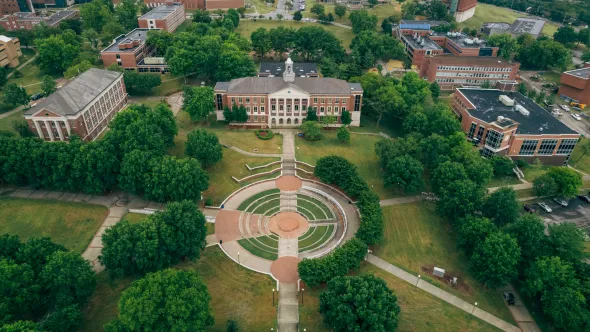
Jubilee Hall at Fisk University
Jubilee Hall was built in 1876. The Fisk Jubilee Singers introduced much of the world to the spirituals as a musical genre—and, in the process, raised funds to preserve their University and to construct Jubilee Hall, the South's first permanent structure built for the education of Black students. As a designated National Historic Landmark, Jubilee Hall remains the dramatic focal point of Fisk's campus today.
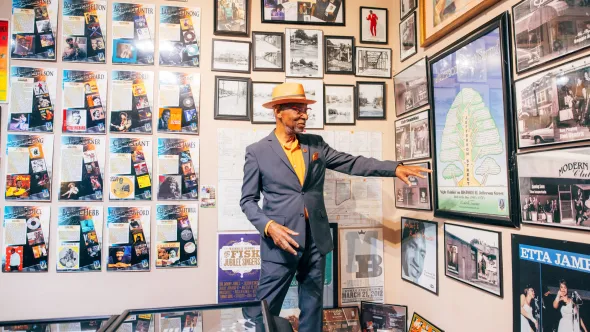
Jefferson Street Sound Museum (JSSM)
Jefferson Street Sound Museum is where music, community, and the Civil Rights Movement came together in Nashville. From the 1940s through the 1970s, Jefferson Street was a center of Black creativity and activism. Clubs and churches along the street carried the music that energized the movement, and the Sound Museum offers an intimate look at the musicians and moments that defined Nashville’s role in the Civil Rights Movement, while celebrating the businesses and community leaders who shaped Jefferson Street’s legacy.
Other notable stops along Jefferson Street include: Tennessee State University (TSU), NAACP, Elks Lodge, Citizens Bank, Alkebu-lan, TN Tribune, Matthew Walker, Hadley Park, etc.
Museum of Christian and Gospel Music
The Museum of Christian & Gospel Music highlights the artists, innovators, and traditions that shaped one of America’s most influential musical forms and its powerful role in the fight for civil rights. Through immersive galleries, recordings, and rare artifacts, the museum traces how gospel music carried stories of hardship, hope, and unwavering faith, becoming a vital force for community, strength, and social change. And it honors the musicians whose work inspired activists and helped soundtrack the pursuit of equality.
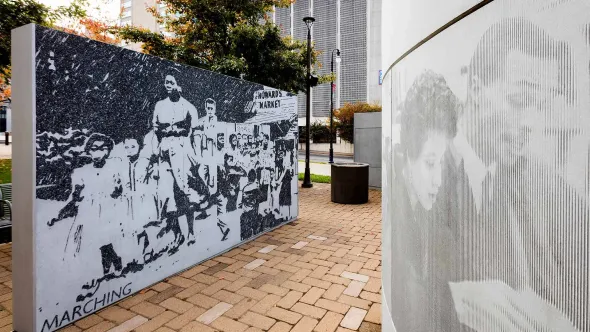
Nashville Public Library
The Civil Rights Room at the Nashville Public Library offers a powerful space for reflection and learning, showcasing materials that capture the intensity of a pivotal era when thousands of African American citizens led a nonviolent challenge against segregation in the city and across the South. The Votes for Women exhibit highlights another defining moment in the fight for equality, centered on the 19th Amendment, which affirmed that the right to vote cannot be denied on the basis of gender, underscoring the broader struggle for civil rights and expanded freedoms in American history.
National Museum of African American Music
The National Museum of African American Music (NMAAM) in downtown Nashville is dedicated to preserving and celebrating the many music genres created, influenced, and inspired by African Americans. The museum features galleries spanning various eras of music history, allowing visitors to immerse themselves in a specific era and become part of the musical experience. The “One Nation Under a Groove” gallery focuses on key musical influences that took place after World War II. This gallery emphasizes the impact of radio, Black music executives, and growth from R&B through disco, pop, and video.
The Woolworth
The Woolworth Theatre is a registered historic site within downtown Nashville’s Fifth Avenue Historic District. Once an iconic “five-and-dime” store, the F. W. Woolworth building became a pivotal location in the Civil Rights Movement, hosting some of Nashville’s earliest lunch counter sit-ins in the 1960s. Visitors can explore the Beyond the Counter historical photo gallery, created in partnership with the Nashville Public Library, on Fridays from 4–5pm. The gallery highlights powerful moments from the Civil Rights Movement that took place in downtown Nashville.
"I came to Nashville, not to bring inspiration, but to gain inspiration from the great movement that has taken place in this community."
Book Your Stay in Nashville
Start planning your next trip by looking for the perfect place to stay. Lodging comes with amenities to make your stay exceptional.