A Tour at the Tennessee State Museum

Experience Nashville’s Place in American History

From frontier settlement to a city that now shapes culture around the world, Music City offers one of the most exciting ways to experience history during America250. Discover stories of westward expansion, early statehood, the Civil War, and the evolution of American culture, all woven into the places, landmarks, and neighborhoods that make Nashville unique.

00
Fort Nashborough

Frontier History in Nashville

Nashville’s story begins at Fort Nashborough, a reconstruction of the late 1779 to 1780 stockade settlement founded by James Robertson and John Donelson along the Cumberland River. The settlement was later named Nashville in honor of Francis Nash, a general in the Continental Army who was injured at the Battle of Germantown during the Revolutionary War. Established during this era, the site reflects early westward expansion, with the Cumberland River connecting Nashville to trade networks that fueled its growth. Today, sites like Historic Mansker’s Station and the Buchanan Log House offer a glimpse into 18th-century life, while Clover Bottom Mansion and the surrounding Cumberland River and Shelby Bottoms show how land and waterways helped shape Nashville’s early economy.

Tennessee Statehood and Government History

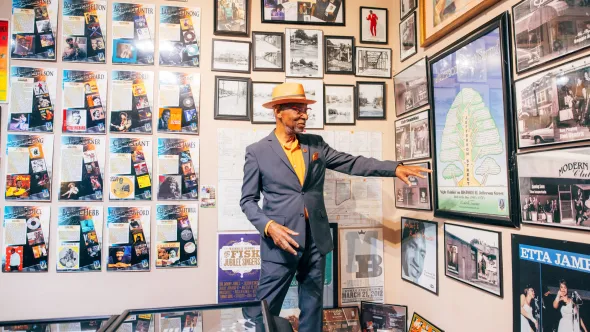
Tennessee became the 16th state in 1796, and Nashville quickly emerged as a center of government and civic life, becoming the permanent state capital in 1843. The Tennessee State Capitol, completed in 1859, remains one of the oldest continuously operating capitols in the country. Today, the nearby Tennessee State Museum traces the state’s story from Indigenous cultures through statehood and beyond. Located in the Donelson & Hermitage neighborhoods, Andrew Jackson’s Hermitage offers insight into the 7th U.S. President’s influence on American politics and the expansion of presidential power in the early 19th century. A favorite local detail is its tree-lined driveway, dating to 1837, which some say is shaped like a guitar.

00
Belmont Mansion exterior

Civil War Sites in Nashville

Nashville played a critical role in the Civil War. In 1862, it became the first Confederate capital captured by Union forces, turning the city into a key Union stronghold for the rest of the war. The Battle of Nashville in 1864 marked one of the most decisive Union victories, effectively ending Confederate resistance in the region. Today, Fort Negley, the largest inland stone fort built by Union forces, still stands as a commanding overlook and a reminder of Nashville’s military importance. Belmont Mansion was occupied by Union troops during the conflict, while nearby sites tell the broader story of the Western Theater. Just outside the city, Fort Donelson National Battlefield marks Ulysses S. Grant’s first major Union victory and the fight for control of the Cumberland River, a turning point that opened key river routes and allowed Union forces deeper into the South. In nearby Franklin, the Carter House, Carnton, and Lotz House bring visitors into the heart of the Battle of Franklin, one of the war's most intense and costly battles. To explore how this era connects to the city’s broader history, follow the U.S. Civil Rights Trail or explore Black History in Nashville.

Historic Sites & Homes

As Nashville grew throughout the 19th century, its economy was shaped by agriculture, trade, and its location along the Cumberland River, which connected the region to broader markets and helped transform Nashville into a regional center of commerce. Sites like Belle Meade Historic Site & Winery, once one of the nation’s premier thoroughbred horse farms, highlight Nashville’s far-reaching influence in breeding and industry, with bloodlines linked to Kentucky Derby winners. Travellers Rest Historic House Museum, built in 1799, offers a glimpse into early Nashville life and later served as a military encampment and headquarters during the Civil War. Belle Air Mansion, built in 1832, showcases Greek Revival architecture and the lifestyle of Nashville’s early elite. Belmont Mansion, completed in 1853 and built and owned by Adelicia Acklen, highlights the rare influence a woman could hold at the time, as she managed one of the South’s most prominent estates. Two Rivers Mansion, an Italianate-style home completed in 1859, reflects the wealth of families tied to river-based trade. Together, these historic homes show how land ownership, agriculture, and trade shaped daily life, with goods and livestock moving through Nashville to markets across the South.


Civics & Education

Following the Civil War, Nashville continued to grow as a center for education and civic progress. Fisk University, founded in 1866, became a leading institution of higher education, and its renowned Fisk Jubilee Singers brought spirituals to audiences around the world beginning in 1871, when the music was largely unknown outside the South. During an international tour in the 1870s, the group performed for Queen Victoria, and a popular local story holds that she remarked they must come from a “city of music,” helping inspire Nashville’s nickname. The Civil Rights Room at the Nashville Public Library highlights the city’s role in the Civil Rights Movement, including the student-led sit-ins of 1960 at downtown lunch counters like The Woolworth on Fifth Avenue, which led to desegregation and made Nashville one of the first Southern cities to take this step. Tennessee State University, established in 1912, reflects the continued expansion of higher education and opportunity in Nashville.

Women's Rights

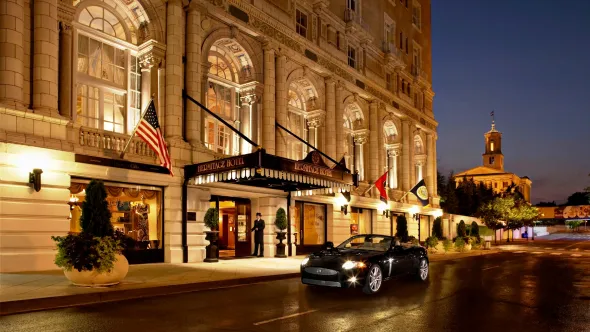
Tennessee played a decisive role in the fight for women’s suffrage, becoming the final state needed to ratify the 19th Amendment in August 1920. Nashville was at the center of that moment, with activists gathering across downtown to advocate for ratification. The Hermitage Hotel played a significant role as the headquarters for pro-suffrage activists lobbying lawmakers to secure the votes needed for passage. The measure passed by a single vote, making Nashville the site of a turning point that secured women the right to vote nationwide. Today, that legacy can be seen at Centennial Park, where the Tennessee Woman Suffrage Monument, created by local artist Alan LeQuire and unveiled in August 2016, honors five leaders of the movement: Anne Dallas Dudley, Abby Crawford Milton, J. Frankie Pierce, Sue Shelton White, and Carrie Chapman Catt. Explore more of these stories across the city through Ways to Explore Women’s History in Nashville.

00
Exterior view of Marathon Village

Historic Neighborhoods

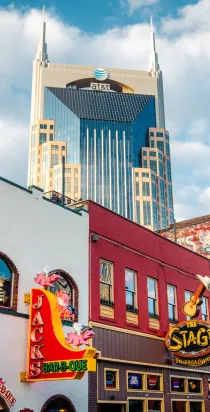
Nashville’s growth is reflected across its neighborhoods, each telling a different chapter of the city’s story. Downtown Nashville, anchored along the Cumberland River, has served as the city’s commercial and transportation hub since its founding, with the river driving early trade and long-term growth. In East Nashville, the Edgefield Historic District showcases post-Civil War expansion as one of the city’s earliest residential suburbs, while nearby Germantown, settled by German immigrants in the mid-1800s, remains one of the city’s oldest neighborhoods. The Jefferson Street Historic District and North Nashville highlight 20th-century growth as centers of culture and entertainment, where venues hosted artists like Jimi Hendrix, Etta James, and Ray Charles, making the area a major stop for touring musicians. The Belmont & Hillsboro neighborhood, home to Belmont Mansion, connects visitors to the Civil War and the city’s growth through education. Just beyond the urban core, Donelson & Hermitage tie to early settlement and presidential history at Andrew Jackson’s Hermitage, while The Nations and Marathon Village along the Charlotte Corridor reflect Nashville’s industrial roots, including early automobile manufacturing at Marathon Motor Works. Together, these neighborhoods show how Nashville has grown from a river town into a city that visitors can explore today.